.png)

Free Things to do in Salem

Salem is known for its many witch museums, tours, attractions and shops, but it has so much to offer that it can be costly to fit everything into your visit. If you are here on a budget, then you probably want to consider doing a mix of activities that you pay for and enjoying some of the free ones. Here is a list of some great places to explore:
1692 Salem Witchcraft Memorials – There are two memorials in Salem. The original Witchcraft Memorial is for the 20 people who were executed during the 1692 hysteria. It is off of Charter Street next to the Old Burying Point. The Proctor’s Ledge Memorial, built in 2017, is on Pope Street next to the confirmed hanging site.
Blue Trees (behind the Peabody Essex Museum) are not a bunch of sad trees. They are a public art installation to raise awareness for climate change. The exhibit prompts a larger conversation about the role of trees in our local environment and elsewhere on the planet — where rampant deforestation is a significant contributor to climate change and the loss of biodiversity.
Cemeteries - Salem has several cemeteries that you can visit. The Old Burying Ground on Charter Street is the most known. But there is also Broad Street, Howard Street, Harmony Grove and St. Mary’s. The first three are downtown. You need to drive to Harmony Grove and St. Mary’s. Many have very beautiful markers. Just be respectful. Don’t touch the markers and don’t do any rubbings.
Churches – Visit some of our beautiful churches in Salem. A few open for visitors throughout the year. Even if some are not open, you can view them from the outside. We have so many picturesque places of worship that have a deep history. Salem was once dominated by the Puritans, but the community progressed to be inclusive of all beliefs.
Danvers Witchcraft Memorial (172 Hobart Street, Danvers) - The 1692 Witchcraft Memorial in Danvers (formerly Salem Village where the witchcraft hysteria began) is just a short drive away. It is for the 20 people executed and the five people who died in jail. It is near a soccer field and an elementary school. Park at the soccer field. Located diagonally across from the memorial is the Ingersoll Ordinary where many hearings were held. The foundation of the parsonage is a national historic site and is located around the corner. The location of the First Church is across the street from the Ordinary. There are many other locations you can visit in Danvers. Some are free and others have a nominal cost.
El Punto Art Museum (Peabody, Ward and Harbor Streets) - Nestled in The Point neighborhood, you will find incredible artist murals on the side of buildings and fences. You can walk through this neighborhood on your own and see these beautiful pieces of art or you can contact the museum for a guided tour for a small donation.
Fort Pickering (50 Winter Island Road) - is a 17th-century historic fort site on Winter Island. It operated as a strategic coastal defense and military barracks for Salem Harbor during a variety of periods, serving as a fortification from the Anglo-Dutch Wards through WW2. Construction of the original fort began in 1643 and it saw use as a military installation into the 20th century.
Hamilton Hall and Chestnut Street – The hall was built in 1805 and is full of history. Chestnut Street is considered the first planned street in the United States. The land was owned by the Pickering family. Many merchants wanted to move away from the noisy seaport and asked to buy some of the land. The decision was to make it a prominent street that was 80 feet wide lined with Chestnut trees and grand homes. You can visit Hamilton Hall during operating hours and walk down this street and see some of the most beautiful homes in Salem.
Herb Mackey's Metal Sculpture Yard (10 Blaney Street) – The artist makes all his sculptures from found objects. You can view them from the street or if anyone is at the sculpture yard, they will let you in to browse and take pictures.
Heritage Trail (all over the city) - The Salem Heritage Trail is a self-guided walking path in Salem, Massachusetts, marked by a yellow line on the sidewalks, that connects the city's historic sites. The trail, which is about 3 miles long and covers over 400 years of history, guides visitors to key locations
Hocus Pocus sites – The original Hocus Pocus movie featured a handful of locations in Salem. The house where the family lived was 4 Ocean Ave, but that is privately owned so be respectful and as non-intrusive as possible if you go there. The Ropes Mansion was Allison’s house. Old Town Hall at 32 Derby Square was used for the parent party scenes. The Phillips School (50 Washington Sq. South) was Jacob Bailey High School. Salem Common (near the basketball court) is where Max and Allison have a conversation. The cemetery scene where the bullies take Max’ sneakers is Old Burying Hill in Marblehead.
Nathaniel Hawthorne’s homes – American novelist Nathaniel Hawthorne was born in Salem and lived at many locations. His birthplace home was at 27 Union Street, but has been moved to the House of the Seven Gables requiring a ground pass to visit. The other homes where he lived throughout his life include 10 ½ Herbert Street, 14 Mall Street, 26 Dearborn Street and 18 Chestnut Street.
Native American Trail - Visitors can walk through public spaces in Salem and use their phones to access location-specific audio experiences by scanning "sun-like medallions" or "QR codes" placed throughout the city. The project highlights the history and ongoing presence of Indigenous peoples, particularly the Naumkeag band of the Massachusett Pawtucket tribes, who lived on the land before colonization.
Parker Brothers site (190 Bridge Street) - The Monopoly game was originally made right here in Salem at the Parker Brothers factory. The old Bridge Street factory was demolished, but the new apartment complex built there includes a small monument honoring the company. You can find it next to Building One.
Ropes Mansion (320 Essex Street) – The worst kept secret in Salem is that the Ropes Mansion was Allison’s home in the original Hocus Pocus movie. The best kept secret in Salem is the beautiful colonial revival garden behind it. It is worth a visit, especially in the summer when all the flowers are in bloom. It is a very calm and pleasant location to visit. You can sit on one of the benches and absorb the beauty around you.
Salem Common – The Salem Common is located between the Hawthorne Hotel and the Salem Witch Museum. There are picnic benches, a playground and a basketball court. You can also relax at the bandstand, view a few military memorials and see the Washington Arch.
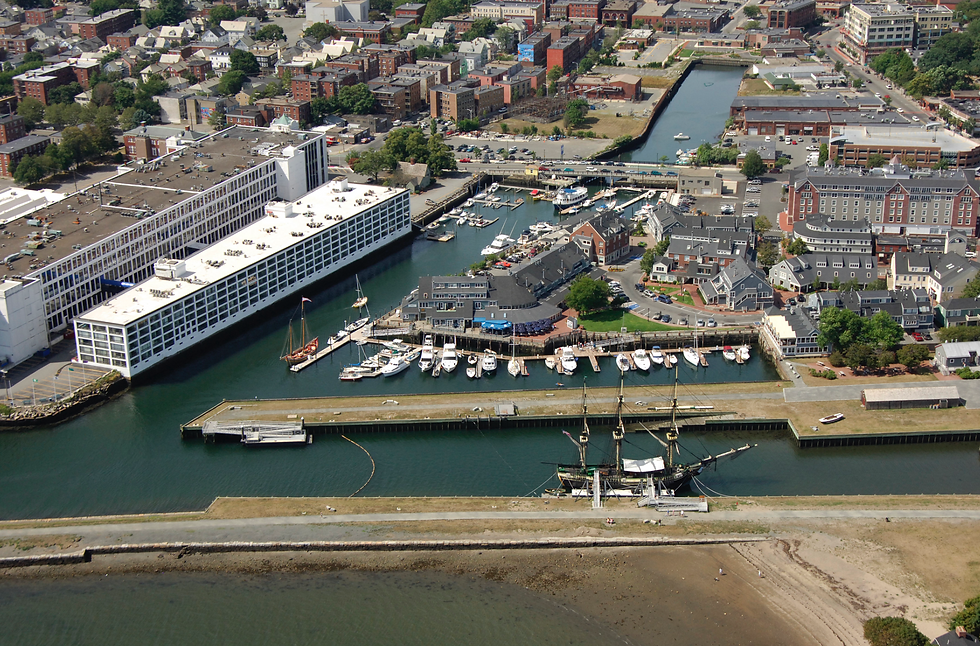
Salem Maritime National Historic Site (160 Derby Street) – This is a Federal site. You already pay for this with your taxes so go get your money’s worth. Walk Derby Wharf to the lighthouse, visit the 1819 Custom House and check out the other homes, scale house, public stores and the Friendship.
Salem Willows (165 Fort Ave) - Historic Salem Willows Park is an ocean front destination packed with games, food and fun. There are arcades, rides for kids and restaurants all surrounded by breathtaking ocean views. The park was a North Shore gathering spot in the late 1800s with steamboat service to Boston, a beach and musical entertainment that included such greats as Duke Ellington, Count Basie and Louis Armstrong.
Statues & Sculptures – Learn some of the history of Salem via the statues that have been erected over the years including Samantha Stevens of Bewitched (Lappin Park), Charlotte Forten (289 Derby Street), Roger Conant (2 Brown Street), Father Theobold Murphy (28 Hawthorne Blvd) and Nathaniel Hawthorne (20 Hawthorne Boulevard). You should also check out the Salem Harbor Connector Path that connects Collins Cove, Derby Street, and Fort Avenue, featuring various sculptures along the way.
Witch Dungeon Museum Pillaries (16 Lynde Street) – Take a picture of yourself in the pillaries outside of the museum. The pillaries, also referred to as stocks, were used for public humility if you broke the rules back in the 1600s. You could be in these for hours, depending on your crime. Other Puritans might come by and throw rotten fruit at you or sometimes feces, but please don’t do that.